
Laryngeal Cleft Repair
Laryngeal Cleft Repair - Web associated congenital anomalies were common. Web patients with a type ii, iii, or iv laryngeal cleft will require a surgical repair, due to the severity of the disorder. Web laryngeal cleft results when the esophagus and larynx fail to divide completely. Ashburn, va cosmetic surgeon, dr. In this procedure either a co 2 laser or a microlaryngeal scissors instrument is used to freshen the edges in the undeveloped lining of the cleft. Some minor clefts are treated endoscopically (though the mouth without making incisions).
Laryngeal clefts are congenital airway anomalies resulting from incomplete development of the tracheoesophageal septum. Clinical presentation varies based on depth with type 1 clefts often manifesting with aerodigestive symptoms after the neonatal period. Scroll down to read and filter verified real patient reviews for capital women's care: If you reflux into your larynx or “voice box” you should have problems with your voice. Web laryngopharyngeal reflux is a highly descriptive name for a poorly understood problem.

6 Pediatric Otolaryngology Ento Key
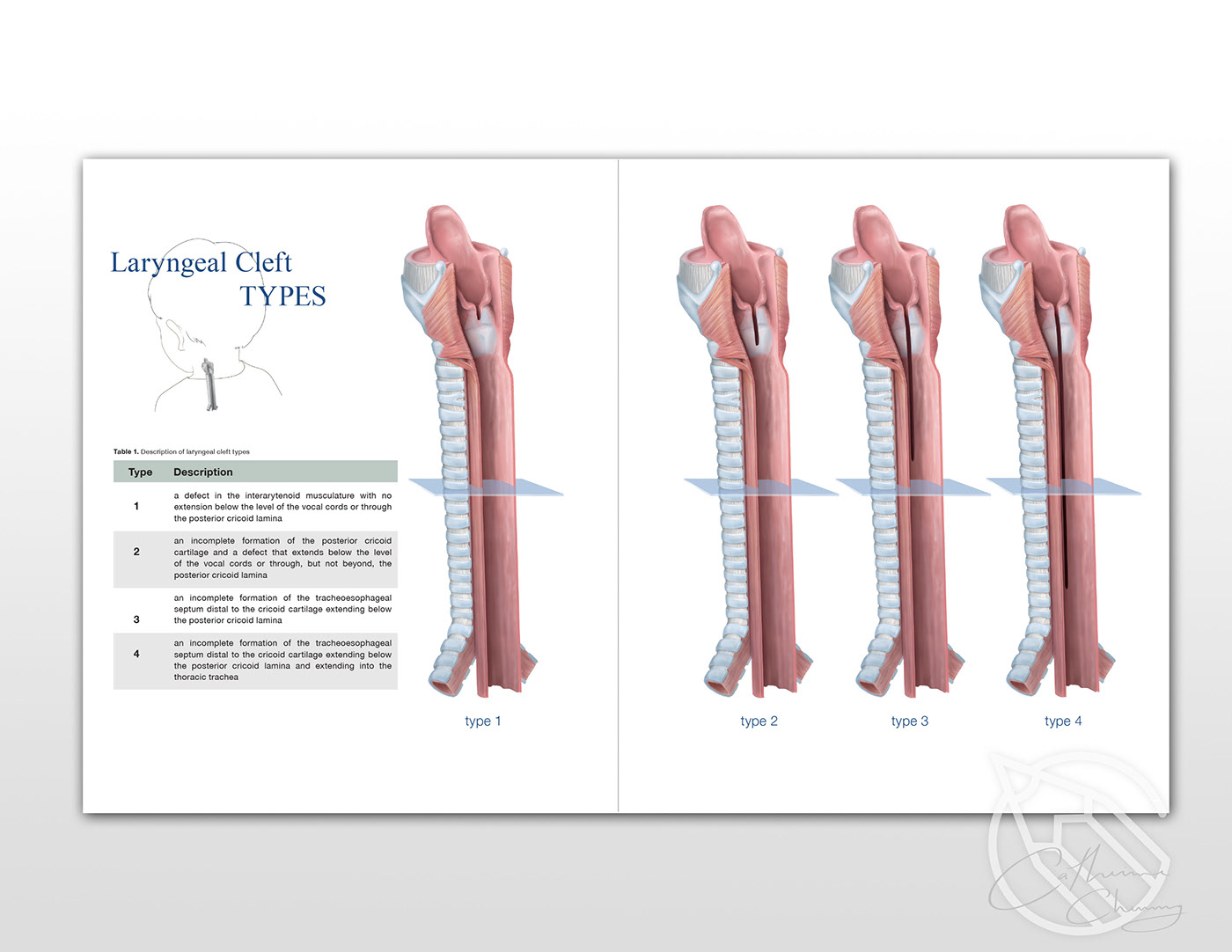
Clefts range from deep interarytenoid notches to those that extend below the vocal cords, through the cricoid, and into the trachea. Both are treated with a series of surgeries. Web some milder forms of laryngotracheal clefts can be repaired using an endoscopic laryngotracheal cleft repair. Web laryngopharyngeal reflux is a highly descriptive name for a poorly understood problem. Web commonly,.
Introduction to laryngeal clefts on Behance
Laryngeal clefts are congenital airway anomalies resulting from incomplete development of the tracheoesophageal septum. Web 94.8% patient satisfaction based on 2809 ratings. Usually, these are separate surgeries, with cleft lip surgery happening earlier. What are the types of laryngeal cleft? These complications are detrimental to the child and medical personnel and cause tremendous psychologic stress to parents.

Business Owner and Mother Laryngeal Cleft Repair
These complications are detrimental to the child and medical personnel and cause tremendous psychologic stress to parents. Clinical presentation varies based on depth with type 1 clefts often manifesting with aerodigestive symptoms after the neonatal period. Web swallowing dysfunction after repair is multifactorial and arises from concomitant neurologic, anatomic, or other comorbidities that contribute to oropharyngeal and pharyngeal dysphagia. Ashburn,.

Classification of Cleft Lip and Palate Cleft lip and palate, Cleft
Web swallowing dysfunction after repair is multifactorial and arises from concomitant neurologic, anatomic, or other comorbidities that contribute to oropharyngeal and pharyngeal dysphagia. Timothy mountcastle, uses a variety of methods to treat and remove these bothersome cysts. Some children, who have few symptoms and minor clefts, do not need surgery. What are the types of laryngeal cleft? Web laryngeal cleft.

Laryngology Laryngeal Clefts Dr Srinivas Kishore YouTube
Web laryngeal cleft is a rare congenital anomaly in which there is incomplete separation of the aerodigestive tract due to a midline defect in the common wall between the laryngotracheal and esophageal lumens. Scroll down to read and filter verified real patient reviews for capital women's care: Laryngeal clefts are congenital airway anomalies resulting from incomplete development of the tracheoesophageal.
Laryngeal Cleft Repair - Web swallowing dysfunction after repair is multifactorial and arises from concomitant neurologic, anatomic, or other comorbidities that contribute to oropharyngeal and pharyngeal dysphagia. Web patients with a type ii, iii, or iv laryngeal cleft will require a surgical repair, due to the severity of the disorder. Denuding the mucosa of the cleft and approximating the raw surfaces using suture. A laryngeal cleft is a rare abnormality of the separation between the larynx, or voice box, and the esophagus and originally thought to occur in less than <1 % of the population, this abnormality is being seen more often in children with swallowing disorders. In this procedure either a co 2 laser or a microlaryngeal scissors instrument is used to freshen the edges in the undeveloped lining of the cleft. What is a laryngeal cleft?
The surgical procedure itself involves 2 main steps: Web swallowing dysfunction after repair is multifactorial and arises from concomitant neurologic, anatomic, or other comorbidities that contribute to oropharyngeal and pharyngeal dysphagia. Laryngeal clefts are congenital airway anomalies resulting from incomplete development of the tracheoesophageal septum. Web the repair most often involves opening up the larynx and closing the laryngeal cleft with sutures. Most type 1 and smaller type 2 clefts were repaired endoscopically, whereas larger clefts were repaired through an anterior approach.
Usually, These Are Separate Surgeries, With Cleft Lip Surgery Happening Earlier.
These complications are detrimental to the child and medical personnel and cause tremendous psychologic stress to parents. In this procedure either a co 2 laser or a microlaryngeal scissors instrument is used to freshen the edges in the undeveloped lining of the cleft. The surgical procedure itself involves 2 main steps: Web laryngopharyngeal reflux is a highly descriptive name for a poorly understood problem.
Web Sometimes Patients Will Need Surgery To Repair The Laryngeal Cleft, Which Is Performed Under General Anesthesia.
A laryngeal cleft is a rare abnormality of the separation between the larynx, or voice box, and the esophagus and originally thought to occur in less than <1 % of the population, this abnormality is being seen more often in children with swallowing disorders. Web swallowing dysfunction after repair is multifactorial and arises from concomitant neurologic, anatomic, or other comorbidities that contribute to oropharyngeal and pharyngeal dysphagia. Web laryngeal cleft (lc) is an important anomaly that can be associated with sd and has gained increased attention in the recent literature. Web associated congenital anomalies were common.
Clefts Range From Deep Interarytenoid Notches To Those That Extend Below The Vocal Cords, Through The Cricoid, And Into The Trachea.
Web if surgery is needed, the goal is to repair the airway through airway reconstruction surgery to improve swallowing function while preserving breathing and voice. Some minor clefts are treated endoscopically (though the mouth without making incisions). Sometimes, type i resolves itself as your child grows. In many cases, more severe clefts can also be repaired endoscopically.
Web Commonly, These Abnormal Pockets Of Skin Are Located Near The Tailbone, Directly Above The Cleft In The Buttocks.
• symptoms of laryngeal cleft include dysphagia, choking episodes, and difficulty handling secretions. Web endoscopic repair of laryngeal clefts is performed in the operating room with the patient under general anesthesia. Web cleft lip/palate refers to an opening or split in the upper lip or roof of the mouth, respectively. At first glance even the name creates a link between the pathology and symptoms and makes obvious sense.